The Forgotten Crisis in Sudan: What Can We Do?
Recently we heard from Sudanese women’s rights activist Hala Al-Karib, who discussed the current realities on the ground in Sudan and what the international community can do to stop this horrific, but largely ignored, conflict.
Sudan is rich in oil, gold, and agricultural products. It has a long history of competition for control of these resources that has historically been along ethnic lines – with ruling Arabs oppressing non-Arab African tribes – sparking violence, atrocities, and genocide. Many of us remember the Save Darfur campaign in the early 2000s. The cycle is being repeated, with massive human toll.
Since 2023, the brutal war between the Sudanese Armed Forces (SAF) and the Rapid Support Force (RSF), a violent paramilitary group used by former dictator Omar al-Bashir to crush opposition, has led to one of the most serious humanitarian crises in the world today.
This jockeying for power has real human consequences. With the world’s largest child displacement, more than 90% of school-age Sudanese have no access to formal education. Only a quarter of Sudan’s health system is functioning, which disproportionately affects women who need reproductive and other healthcare. According to the World Health Organization, the fighting has killed at least 40,000 people and displaced 12 million, though the actual numbers are probably much higher. Over 24 million people are also facing acute food insecurity, says the World Food Program.
On October 26, after 18 months of siege, the North Darfuri capital El-Fasher fell to the brutal RSF, which has led to mass killings, sexual violence, forced displacement, and staggering malnutrition rates.
“We have been completely abandoned. The international community has abdicated its responsibility and ignored our suffering.”
In the face of all of this, what can we do?
1. Talk about what is happening in Sudan as we do with other conflicts. Both the U.S. (under Biden) and the International Criminal Court (ICC) determined that genocide, war crimes, and crimes against humanity are being committed in Sudan. Why do we hear about the atrocities and genocidal acts that Israel is committing in Gaza but not those occurring in Sudan? Is it the color of Sudanese skin? Or because Sudan is a shithole country? Or that people believe (wrongly) that it is not of strategic interest to the U.S. and other western powers? One could put forward many theories. Ultimately, it is being ignored.
Humanitarian arguments aside, Sudan is the third largest country in Africa, sharing a border with Egypt, Libya, Chad, Central African Republic, South Sudan, and Democratic Republic of Congo (DRC). Its stability is strategically important for its neighbors. The U.S. also has interest in maintaining security in the region, especially as China and Russia expand their influence.
2. Stop the flow of arms into Sudan and the extraction and exploitation of its resources by armed groups and outside countries. Since 2023, the increased flow of arms into Sudan from countries with economic interest in controlling Sudanese resources, such as the United Arab Emirates’ (UAE) purported support of the RSF, has fueled the violence. Making it difficult for the RSF to get the arms they need – and for other countries to control Sudan’s resources – would go a long way towards stemming the violence.
3. Demand support from international agencies. Pressure multilateral agencies such as the United Nations, African Union, and others to commit resources – money, time, and people – to protect civilians and establish serious political processes (diplomacy, mediation, and negotiations) to end the atrocities. They too have left Sudan largely by the wayside.
4. Speak out about sexual violence. The reports of sexual violence in Sudan are vile and horrifying. In today’s wars, sexual violence is used as a tactic to terrify and decimate communities. Conflict after conflict, it has been allowed to continue. It must stop. Women’s bodies must not be an extension of the battlefield.
5. Support civil society movements, especially women and marginalized groups. Rather than just focus on the people with weapons, we must raise awareness of those who are working hard every day for peace and amplify their efforts. Civil society groups, and women’s organizations especially, are saving lives, showing amazing courage, working to stabilize communities, and doing as much as they can to sustain peace. But they are neither talked about nor supported.
6. Press for prosecution of war crimes at the International Criminal Court. In July, the ICC’s chief prosecutor said it believes that genocide and war crimes are being committed in Sudan. The international community should work with and empower Sudanese activists – who have knowledge and documentation of crimes committed in their communities – to make sure that war criminals are held accountable for their actions. Although the U.S. is not a member of, and in fact condemns the ICC, all of us can talk about it, raise awareness of the crimes, and exert pressure – as people are doing with Israel/Gaza.
7. Advocate for an approach to peace negotiations that prioritizes the voice of Sudanese civilians and includes women, youth, and other marginalized communities. To have lasting peace, it is essential to move beyond the focus on power and address the root causes of conflict. Otherwise, ceasefires and peace agreements are only temporary band-aids. It is proven that peace processes that include women are more successful because women will talk about what is happening in their communities and how to solve the problems, not just about who will have what position after the war is over. The roles of Sudanese women and youth, both within Sudan and in the diaspora, are essential.
A ceasefire deal recently proposed by the U.S., Egypt, Saudi Arabia, and the UAE failed. Two weeks ago, during a visit with Saudi Crown Prince Mohammed bin Salman, and apparently at his request, Trump announced his intention to work with Middle East partners to renew efforts for a viable ceasefire. However, given his questionable history with other conflicts, and his tendency to make promises on a whim, the promise will likely ring hollow.
With everything going on in our country and in the world, we are all tired and the tasks before us seem daunting. The international order is crumbling, and the rule of law is increasingly disregarded. But we must not lose sight that these are still the foundations of freedom, peace, and economic growth. Each of us can play our own part, even in some small way. The crisis in Sudan – one of the worst in the world – must not be forgotten.

Related Articles
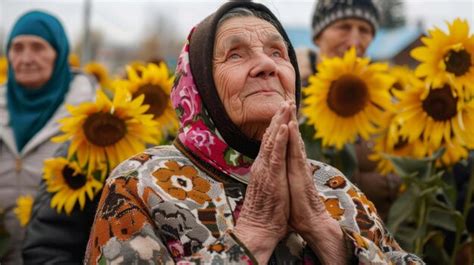
Four Years of War Can’t Stop Ukrainians
Last Tuesday marked the fourth anniversary of Russia’s full-scale invasion of Ukraine. Recently I met with a Ukrainian colleague with whom we are working to examine the impact of the…
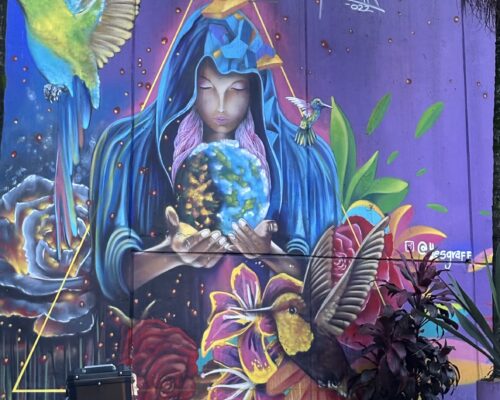
Colombia: Building a Culture of Peace
“The armed conflict extinguished people’s hope and dreams. This is how we revive them.” – Gloria Amparo Alzate In April I visited Colombia, a beautiful country with a complex history…
The Forgotten Crisis in Sudan: What Can We Do?
Recently we heard from Sudanese women’s rights activist Hala Al-Karib, who discussed the current realities on the ground in Sudan and what the international community can do to stop this…

Welcome to Reflections on Peace
Reflections on Peace examines today’s conflicts, shares personal reflections, amplifies the voices of peacebuilders, and seeks better pathways to peace. It is also a platform for guest authors – students,…

Trump admin’s plan for mass deportation is a recipe for social, economic turmoil
The Trump administration is moving rapidly to fulfill campaign promises, including the mass deportation of immigrants. Mass deportation is a recipe for social and economic turmoil. Not only does it tear families apart,…

Gender, Law, and Security: The Unseen Foundation of Global Stability
Security and the rule of law (ROL) are closely intertwined. It is commonly understood that laws exist to regulate human relations, both reflecting and establishing norms of behavior. Societies with…